Why Your 4K Video Stutters: A Complete Guide to Decoding Performance Tests
You hit play on a 4K stream, expecting cinematic smoothness. Instead, the image shatters into blocky artifacts. The audio drifts out of sync. Your fan spins up like a jet engine taking off. It feels like your hardware failed you. Often, that is not the whole story. The real culprit hides in how your system carries out the decoding work for high-resolution video streams.
Most people blame their internet connection right away. They assume bandwidth is the key driver. While a slow pipe causes buffering, stuttering and frame drops usually point to something deeper: your device struggling to perform the heavy lifting required to unpack compressed video data. When a browser or media player cannot keep pace with the decode rate, frames get discarded. The experience falls apart.
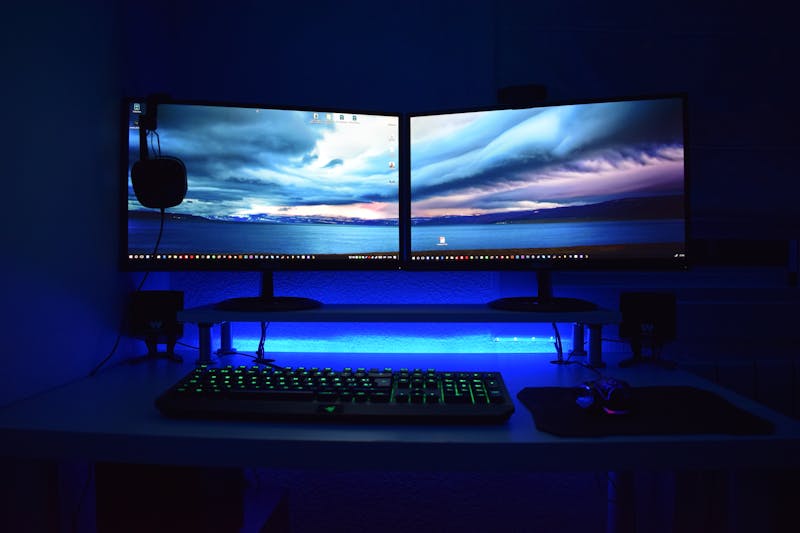
Let's talk about what actually happens under the hood. Modern codecs like H.265 (HEVC) or AV1 squeeze massive amounts of visual data into small files. This compression is brilliant for storage and transit. However, it demands intense computational power to reverse the process during playback. Your CPU or GPU must carry out complex mathematical operations for every single frame, thirty or sixty times per second. If the decoder cannot finish its work before the next frame arrives, you see a stutter.
Browser updates frequently shift how they handle this workload. A new version of Chrome or Firefox might change the way it leverages hardware acceleration. Suddenly, a workflow that ran smoothly last month now chokes on 4K content. This is not magic; it is a configuration mismatch. The browser may have reverted to software decoding, forcing your CPU to handle tasks it should offload to the GPU. Or perhaps the specific codec implementation in that update contains a regression that slows down the decode pipeline.
Hardware limitations play a role, but not always in the way you think. You might possess a powerful graphics card, yet the video still stutters. Why? Because the software stack fails to align with the available silicon. Maybe the driver is outdated. Maybe the browser does not recognize the specific encoding profile of your video file. High bitrates exacerbate this. When you push a 100Mbps HEVC stream through a system that only partially supports hardware acceleration, the bottleneck becomes obvious immediately.
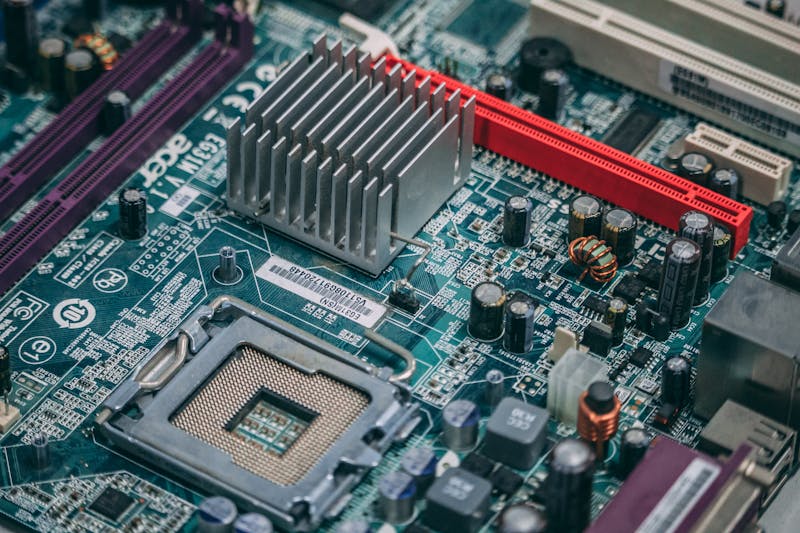
Diagnosing this mess requires more than guessing. You need to perform a structured analysis of your video capabilities. This is where a dedicated Video Capability Test becomes essential. It does not just tell you if a video plays; it dissects the entire chain. It checks whether your environment can successfully carry out decoding for specific resolutions, frame rates, and codec combinations.
Start by granting the necessary permissions. Some tests require access to your media devices or system metrics to gather accurate data. Without these, the tool can only offer surface-level observations. Once you enable full access, the test initiates a series of controlled playback scenarios. It forces the system to process synthetic 4K and even 8K streams using different codecs.
The core of the analysis lies in the metrics. You are looking for dropped frame counts and decode latency. A healthy system shows zero dropped frames and consistent timing. If the counter ticks up, the decoder is falling behind. Pay attention to which component spikes. Is the CPU maxed out while the GPU sits idle? That signals a failure to leverage hardware acceleration. Is the memory bandwidth saturating? That suggests the data throughput exceeds what your bus can handle.
Consider the scenario of screen sharing. You are an editor trying to present a 4K timeline to a client over a video call. The local playback is fine, but the shared screen looks choppy. Here, the bottleneck often shifts to the encoding side of the screen capture process, combined with the decoding load on the receiver's end. The test helps validate whether your setup can handle simultaneous encode and decode operations without collapsing. It reveals if your current configuration is well-suited for high-resolution collaboration or if you need to adjust your output settings.
Edited media introduces another layer of complexity. Raw footage from modern cameras often uses variable frame rates or obscure color spaces. Standard players might struggle to interpret these traits correctly. By running a pre-flight check with a capability test, you identify these incompatibilities before they ruin a client review. You discover that a specific variant of ProRes or DNxHR causes the system to stumble, allowing you to transcode or adjust your workflow proactively.
Do not ignore the impact of background processes. Other applications competing for GPU resources can starve your video player. The test isolates the video pipeline to give you a clear baseline. If the isolated test passes but real-world usage fails, you know to hunt for resource hogs elsewhere in your OS. This distinction saves hours of futile tweaking within the media player itself.
Solutions vary based on what the data tells you. If the test confirms a lack of hardware acceleration, dive into your browser flags or graphics driver settings. Force-enable VP9 or AV1 hardware decoding if the option exists. Update your GPU drivers to ensure they speak the same language as your operating system and browser. Sometimes, simply switching browsers yields immediate results because one engine handles a specific codec more efficiently than another.
For persistent issues with high-bitrate files, consider proxy workflows. There is no shame in generating lower-resolution proxies for editing and review. It is a practical trade-off that ensures fluid interaction with your timeline. Save the full-resolution decode work for the final export stage where batch processing can manage the load more effectively than real-time playback.
Audio sync issues often ride the coattails of video stutter. When frames drop, the audio continues marching forward, creating a drift. Fixing the decode performance usually resolves the sync problem automatically. However, if the audio itself is glitching, check your sample rate settings and buffer sizes. Mismatched audio clocks can cause jitter that feels like video lag, even when the video stream is perfect.

The underlying reason for most 4K frustration is a lack of visibility into the decoding process. We treat video playback as a black box. It either works or it doesn't. By employing a systematic testing approach, you turn that black box into a transparent system. You see exactly where the chain breaks. You stop guessing and start fixing the actual root cause.
Whether you are a professional editor ensuring your rig can handle a demanding project or a viewer tired of buffering during movie night, the principles remain the same. Performance is not just about raw speed; it is about compatibility and efficient resource management. Run the tests. Analyze the metrics. Adjust your configuration. Smooth, high-resolution video is achievable, but only if you are willing to look past the surface and understand the mechanics driving your display.
설정을 테스트하기 준비가 되었나요? 단 몇 초만 걸립니다.
추천 도구
조도 센서(Lux) 감지 테스트
기기 조도 센서의 밝기 데이터(Lux)를 실시간으로 읽어옵니다. 스마트폰이나 노트북의 자동 밝기 조절 기능이 정상인지 확인하고 주변 빛의 강도를 모니터링하세요.
온라인 GPS 위치 정확도 테스트
현재 기기의 지리적 위치 정보를 가져와 GPS 및 IP 위치 추적의 정확도를 테스트합니다. 위도/경도 좌표, 고도 및 실시간 위치 업데이트 속도를 확인하세요.
터치 스크린 테스트 - 멀티 터치 점검
스마트폰이나 태블릿의 멀티 터치 개수와 반응 속도를 검사하는 전문 도구입니다. 드로잉 테스트를 통해 터치 끊김, 데드존(Dead Zone), 감도 문제를 진단하세요.
화면 공유 테스트 - 브라우저 미러링 점검
온라인 회의의 화면 공유 환경을 시뮬레이션하여 브라우저의 공유 권한과 기능을 원클릭으로 점검합니다. 창 공유, 전체 화면 공유 및 시스템 오디오 공유가 정상적인지 확인하세요.
온라인 마이크 테스트 - 녹음 및 소리 감지
무료 온라인 마이크 테스트 도구입니다. 마이크의 소리 출력, 에코, 노이즈 여부를 원클릭으로 확인하세요. 실시간 파형 표시와 녹음 재생을 지원하며, 별도 소프트웨어 설치 없이 개인정보를 보호합니다.
주사율(Hz) 실시간 측정기
현재 화면의 실시간 주사율(FPS)을 원클릭으로 확인하세요. 모니터가 120Hz, 144Hz 또는 240Hz 고주사율 모드로 정상 작동 중인지 검증하고 화면 부드러움을 체크합니다.