Why Your Screen Won't Adjust: A Practical Guide to Ambient Light Sensor Testing
Your phone dims when you need it bright, or blasts full luminance in a dark theater. It feels like the device is gaslighting you.
Most users blame the software update. They dig into settings, toggling "Auto-Brightness" off and on again, hoping to reset some invisible logic gate. Rarely does that fix the underlying reason. The culprit sits behind your front glass: the ambient light sensor, often referred to as the Lux sensor. When this component fails to carry out measurement of incoming photons correctly, the entire display pipeline collapses into guesswork.
We treat these sensors as magic black boxes until they break. Then we panic.
Let's strip away the marketing fluff about "adaptive display technology" and look at the raw data flow. Your operating system relies on a continuous stream of illuminance values, measured in Lux, to perform configuration for screen backlight intensity. If that stream gets corrupted, stalled, or saturated, your eyes pay the price.
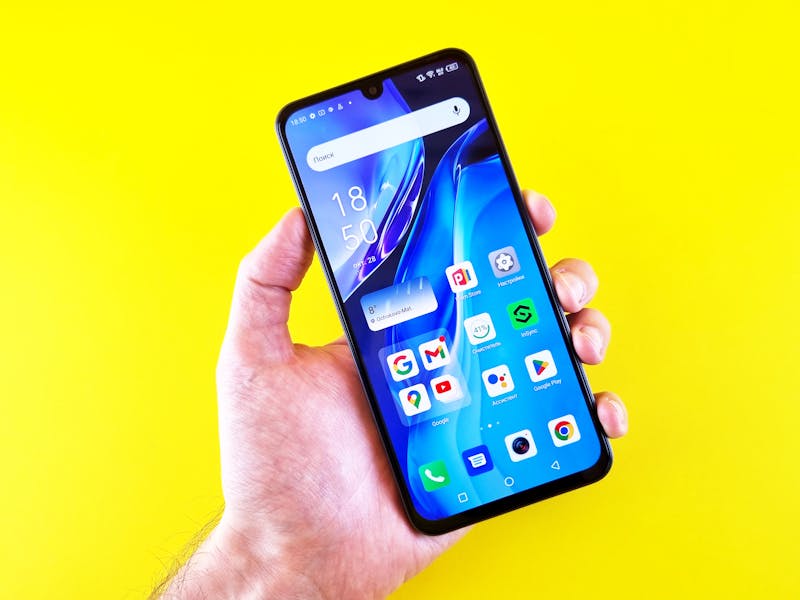
The Silent Failure Mode
Hardware doesn't always die with a bang. Sometimes it just lies.
A faulty ambient light sensor might report a constant value regardless of whether you are standing under noon sun or inside a closet. Maybe it reads 50 Lux everywhere. The OS, believing the environment is stable, refuses to adjust the backlight. You end up squinting outdoors because the system thinks you are indoors.
Or worse, the sensor drifts. It reports fluctuating numbers wildly, causing the screen to pulse like a strobe light. This isn't a UI bug; it is a failure to handle input data work correctly at the driver level.
Developers and IT admins often overlook this because they test devices in controlled office lighting. That is a mistake. Office fluorescents provide a narrow, consistent spectrum that rarely pushes the sensor to its limits. You need to see how the hardware behaves when subjected to extreme variance.
Leveraging Real-Time Data for Diagnosis
Stop guessing. Start measuring.
You do not need expensive lab equipment to validate sensor accuracy right away. Modern browsers expose the Ambient Light Sensor API, allowing web pages to read the illuminance data directly from the hardware. By leveraging online testing tools, you can observe the raw Lux output in real time.
Open a diagnostic tool on the target device. Watch the number. Wave your hand over the top bezel. Walk toward a window.
If the number stays flat, the sensor is likely disconnected, covered by a screen protector that blocks IR/UV spectra, or the driver has crashed. If the number jumps from 10 to 50,000 instantly without a gradient, you are dealing with saturation issues or noisy data streams.
This process of carrying out interaction with the sensor via a web interface gives you immediate visibility into what the OS sees. It bypasses the manufacturer's smoothing algorithms that usually hide these glitches.
Why Calibration Matters More Than You Think
Factory calibration is rarely perfect for every use case.
Manufacturers calibrate displays based on average scenarios. They aim for a balance between battery life and readability. But "average" does not match your specific environment. A teacher using tablets in a sun-drenched classroom needs a different response curve than a developer coding in a dim server room.
When the sensor data aligns with the wrong brightness curve, readability suffers. You might get 400 nits when you actually need 800. Or the system drains the battery by pushing 1000 nits when 200 would suffice.
Using real-time Lux data allows you to verify if the device's reaction matches the physical reality. Does a reading of 10,000 Lux actually trigger the high-brightness mode? If not, the mapping table in the firmware is broken.
Some advanced users attempt to recalibrate by using third-party apps that force specific brightness levels at certain Lux thresholds. While this does not fix a broken sensor, it can make a poorly tuned one usable. You perform management of the display behavior manually, overriding the defective automatic logic.
Common Misconceptions About "Auto-Brightness"
People assume auto-brightness is a simple on/off switch. It is not.
It is a complex feedback loop involving thermal throttling, battery state, content type, and user habit learning. If your screen won't adjust, blaming the "feature" misses the point. The feature is working exactly as programmed; the input data is garbage.
Consider the screen protector. Many tempered glass protectors come with oleophobic coatings that inadvertently filter the specific wavelengths the sensor needs to detect. You install protection, and suddenly the phone thinks it is always twilight. Removing the protector often performs recovery of normal function instantly.
Then there is the software stack. On Android, the SensorService handles the data ingestion. If a rogue app holds a wake lock or floods the sensor queue, the system might drop updates. The screen freezes at one brightness level not because the hardware failed, but because the software pipeline got clogged.
Practical Steps for IT Deployments
If you are rolling out hundreds of devices for an enterprise or school, do not skip the sensor validation step.
Include a quick Lux test in your staging protocol. Place each device under a standardized light source. Verify that the reported value falls within an acceptable range. Flag any unit that shows zero variance or erratic spikes.
Catching a batch of defective sensors before deployment saves countless support tickets later. Users will not report "sensor drift"; they will report "broken screens." The distinction matters for warranty claims and vendor negotiations.
Use the web-based tools to generate a quick report. Capture the min/max Lux values while moving the device from shadow to light. If the delta is too small, the unit is defective. Send it back.
This approach shifts the workflow from reactive troubleshooting to proactive quality assurance. You stop fixing individual complaints and start preventing systemic failures.
The Human Element of Display Comfort
Ultimately, this is about eye strain.
When the screen fails to adapt, your pupils constantly dilate and contract to compensate for the mismatch between ambient light and display luminance. This causes fatigue, headaches, and reduced productivity. It is a physical toll paid for a digital inconvenience.
Ensuring your ambient light sensor functions correctly is not just a technical checkbox. It is a health consideration.
By taking the time to test, validate, and understand how your device measures light, you regain control. You stop accepting poor performance as "just how phones are." You demand that the hardware does its job.
Next time your screen acts up, don't just toggle the setting. Look at the data. Ask what the sensor is actually seeing. The answer is usually right there in the Lux reading, waiting for someone to notice.
설정을 테스트하기 준비가 되었나요? 단 몇 초만 걸립니다.
추천 도구
온라인 마이크 테스트 - 녹음 및 소리 감지
무료 온라인 마이크 테스트 도구입니다. 마이크의 소리 출력, 에코, 노이즈 여부를 원클릭으로 확인하세요. 실시간 파형 표시와 녹음 재생을 지원하며, 별도 소프트웨어 설치 없이 개인정보를 보호합니다.
주사율(Hz) 실시간 측정기
현재 화면의 실시간 주사율(FPS)을 원클릭으로 확인하세요. 모니터가 120Hz, 144Hz 또는 240Hz 고주사율 모드로 정상 작동 중인지 검증하고 화면 부드러움을 체크합니다.
조도 센서(Lux) 감지 테스트
기기 조도 센서의 밝기 데이터(Lux)를 실시간으로 읽어옵니다. 스마트폰이나 노트북의 자동 밝기 조절 기능이 정상인지 확인하고 주변 빛의 강도를 모니터링하세요.
온라인 헤드폰/스피커 테스트 - 좌우 채널 확인
전문적인 오디오 장비 테스트 도구로, 헤드폰과 스피커의 좌우(L/R) 채널 밸런스, 저음 효과 및 음질 왜곡 현상을 정밀하게 점검하여 사운드 출력을 최적화합니다.
브라우저 알림 푸시 테스트
웹 푸시 알림 기능을 온라인에서 테스트하여 브라우저와 OS의 알림 권한 설정을 검증합니다. 사용자 지정 테스트 메시지를 전송해 알림 미수신 문제를 해결하세요.
HDR 디스플레이 지원 능력 검사
모니터나 스마트폰 화면이 HDR(High Dynamic Range)을 지원하는지 온라인에서 확인하세요. SDR과 HDR의 색상 차이를 직관적으로 비교하고 화면 밝기와 색상 깊이를 테스트합니다.