Why Your Screen Dimming Acts Up: A Guide to Ambient Light Sensor Testing
Your phone decides how bright the screen should be before you even touch the settings menu. That decision happens in milliseconds, driven by a tiny component called the ambient light sensor. When this system works, it feels like magic. The display ramps up in sunlight and dims smoothly under streetlamps. But when it fails? You are squinting at a black mirror outdoors or blinding yourself in a dark room.
The underlying reason for these glitches rarely lies in the software algorithm alone. More often, the sensor itself is feeding garbage data to the display controller. Maybe dust blocks the aperture. Perhaps the calibration curve has drifted over time. Or maybe the firmware simply ignores rapid changes in illuminance. To fix erratic dimming, you must stop guessing and start measuring live metrics.
Most users treat auto-brightness as a binary switch: on or off. This approach misses the nuance of how devices handle lux values. The sensor does not just see "light" or "dark." It performs measurement of specific illuminance levels, usually ranging from 0 lux in total darkness to over 10,000 lux in direct sun. The operating system then maps these raw numbers to a brightness percentage using a complex lookup table. If that mapping aligns poorly with reality, the screen behaves erratically.
Consider the common scenario where a device stays dim despite sitting on a sunny windowsill. The user cranks the brightness manually, defeating the purpose of the feature entirely. Why did the automation fail? Often, the sensor saturation point is too low. Cheap sensors might max out at 2,000 lux, treating noon sunlight the same as a cloudy afternoon. The system thinks it has reached maximum input and refuses to push the backlight further. Without testing the upper limits of the sensor's range, you cannot diagnose this ceiling effect.
Then there is the opposite problem: the flashlight effect. You walk into a dim restaurant, and the screen blasts full brightness because a single overhead spotlight tricked the sensor. This indicates a failure in temporal smoothing. Good implementations carry out averaging of sensor readings over several seconds to prevent jitter. Bad ones react instantly to every photon spike. If your screen flickers wildly when shadows pass over it, the smoothing algorithm is likely broken or disabled.
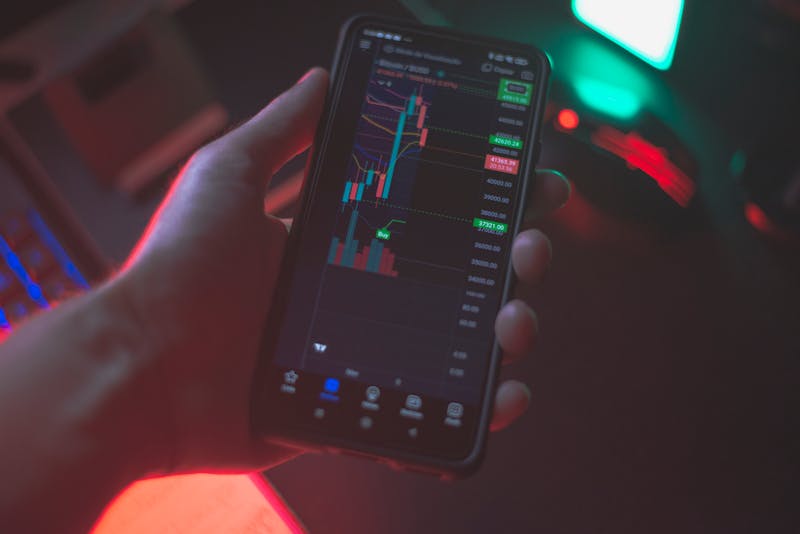
Troubleshooting requires tools that let you peek behind the curtain. You need to perform validation of the raw sensor output rather than relying on the final display result. On Android, developer options often hide a "Sensor Report" or similar diagnostic tool. iOS users might need third-party apps that leverage the Core Motion framework to expose ambient light data. These tools display the current lux value in real time.
Start by placing the device in a controlled environment. A completely dark closet should read near 0 lux. Shine a standard desk lamp from one foot away; you should see a jump to perhaps 300-500 lux. Take the device outside. Direct sunlight should push the reading well above 5,000 lux, often hitting 10,000 or more. If your outdoor reading stalls at 1,500 lux while your eyes scream that it is blazing bright, the sensor is clipped. It cannot perceive the true intensity of the environment.
This discrepancy explains why manual overrides feel necessary. The system believes it is already at 100% effort based on faulty input. No amount of software tweaking will fix a hardware limitation or a blocked sensor. Sometimes a case design covers the tiny aperture near the earpiece. Other times, a screen protector with poor transparency alters the light transmission characteristics enough to skew the baseline.

Calibration is another frequent culprit. Manufacturers ship devices with a generic curve that attempts to suit average human preference. But "average" rarely matches your specific usage pattern. Some users prefer punchy, high-contrast displays even in moderate light. Others prioritize battery life and eye comfort, tolerating lower brightness. When the default curve does not align with your needs, the auto-brightness feature feels broken even if the sensor functions perfectly.
Advanced testing involves recording the step-response of the system. Change the lighting condition abruptly—turn off the room lights instantly—and watch how fast the screen reacts. Does it drop immediately? Or does it lag for five seconds? A slight delay is intentional to avoid annoyance during transient events like car headlights passing by. However, a lag exceeding three or four seconds suggests the filtering logic is too aggressive. The device is prioritizing stability over responsiveness to a significant extent.
Eye-comfort modes, often called Night Shift or Blue Light Filter, complicate this further. These features reduce color temperature based on time of day, but they also frequently cap maximum brightness. If you enable such a mode, the system might intentionally ignore high lux readings to maintain a dim, warm glow. Users often mistake this designed behavior for a sensor malfunction. Always verify whether software constraints are overriding sensor data before blaming the hardware.
For technicians validating new devices, the workflow must include stress testing. Expose the sensor to rapidly changing light sources. Strobe a light source or wave the device quickly between shadow and sun. Monitor the data stream for dropped frames or frozen values. A robust sensor driver handles these transitions gracefully, carrying out interpolation to fill gaps without crashing the display service. A weak implementation might hang, leaving the screen stuck at a single brightness level until a reboot occurs.
Do not overlook the impact of thermal throttling either. Sensors generate heat, and so do backlights. In prolonged high-brightness scenarios, the device might artificially lower the reported lux value to force the screen to dim, protecting internal components from overheating. This looks like a sensor error but is actually a safety mechanism. Checking device temperature alongside lux readings helps distinguish between genuine sensing failures and thermal management interventions.
Fixing these issues ranges from simple cleaning to flashing custom kernel modules. If dust blocks the aperture, compressed air solves it right away. If the calibration curve is off, some root-level tools allow editing of the brightness_mapping.xml or equivalent configuration files. You can redefine which lux value triggers which brightness percentage. This grants granular control, letting you tailor the response curve to match your exact visual preferences and typical environments.
Ultimately, auto-brightness relies on a chain of trust: the physical world hits the sensor, the sensor reports a number, the OS interprets that number, and the backlight adjusts. Break any link in this chain, and the experience falls apart. By leveraging real-time monitoring tools, you isolate exactly where the breakdown happens. Stop accepting sluggish or blinding screens as normal. Test the data, identify the bottleneck, and force the device to adapt properly to the light around you.
설정을 테스트하기 준비가 되었나요? 단 몇 초만 걸립니다.
추천 도구
브라우저 알림 푸시 테스트
웹 푸시 알림 기능을 온라인에서 테스트하여 브라우저와 OS의 알림 권한 설정을 검증합니다. 사용자 지정 테스트 메시지를 전송해 알림 미수신 문제를 해결하세요.
온라인 헤드폰/스피커 테스트 - 좌우 채널 확인
전문적인 오디오 장비 테스트 도구로, 헤드폰과 스피커의 좌우(L/R) 채널 밸런스, 저음 효과 및 음질 왜곡 현상을 정밀하게 점검하여 사운드 출력을 최적화합니다.
화면 공유 테스트 - 브라우저 미러링 점검
온라인 회의의 화면 공유 환경을 시뮬레이션하여 브라우저의 공유 권한과 기능을 원클릭으로 점검합니다. 창 공유, 전체 화면 공유 및 시스템 오디오 공유가 정상적인지 확인하세요.
Web 블루투스 연결 및 스캔 테스트
Web Bluetooth API를 활용해 주변의 블루투스 장치를 온라인으로 스캔합니다. 브라우저의 블루투스 연결, 페어링 및 데이터 전송 능력을 테스트하세요 (하드웨어 지원 필요).
비디오 디코딩 성능 테스트 - 4K/8K 재생 점검
브라우저와 기기의 비디오 디코딩 성능을 온라인에서 확인하세요. 4K/8K 고화질 영상 테스트를 지원하며, 재생 끊김, 프레임 드랍, 화면 깨짐 및 싱크 불일치 문제를 빠르게 진단합니다.
온라인 마이크 테스트 - 녹음 및 소리 감지
무료 온라인 마이크 테스트 도구입니다. 마이크의 소리 출력, 에코, 노이즈 여부를 원클릭으로 확인하세요. 실시간 파형 표시와 녹음 재생을 지원하며, 별도 소프트웨어 설치 없이 개인정보를 보호합니다.